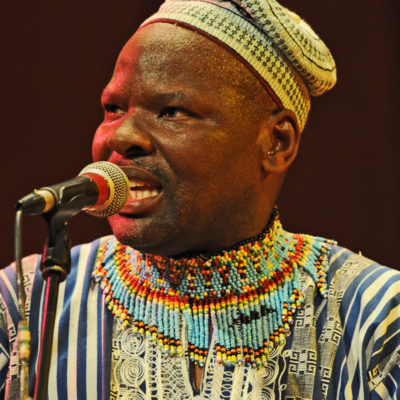
prof dizu

PROFESSOR DIZU PLAATJIES

Indigenous Music Icon | Master Instrument Maker | Educator | Cultural Heritage Custodian

Preserving Africa’s Ancestral Sounds for Future Generations

Professor Dizu Plaatjies is one of South Africa’s most celebrated indigenous musicians, master instrument makers and cultural heritage advocates. Internationally acclaimed for his extraordinary mastery of African percussion and string instruments, he has dedicated more than four decades to preserving, revitalising and sharing Africa’s rich musical traditions.

As the founder of the internationally renowned Amampondo and Ibuyambo ensembles, Professor Plaatjies has introduced audiences across more than 90 countries to the beauty, complexity and spiritual significance of African indigenous music.

His work is deeply rooted in the musical heritage of the Khoi, San and Nguni peoples, bringing together ancestral knowledge, traditional craftsmanship, contemporary performance and education.

A Pioneer of African Indigenous Music

Professor Plaatjies founded Amampondo in 1979, developing the ensemble into one of South Africa’s most internationally recognised traditional percussion groups.

Despite the restrictions and cultural suppression of apartheid, Amampondo became a powerful ambassador for African music, performing internationally and appearing at Nelson Mandela’s 70th Birthday Tribute Concert at Wembley Stadium in 1988.

In 2005, he founded the Ibuyambo Ensemble, continuing his mission to preserve and celebrate indigenous instruments while introducing new generations to their musical and cultural significance.

His acclaimed recordings include Ibuyambo (2005), African Kings (2008), Ubuntu – The Common String (2015) and Return of the Ancestors (2019). His work has earned two South African Music Awards (SAMAs).

Master Educator and Cultural Mentor

Professor Plaatjies’ contribution extends far beyond the concert stage.

His CV identifies him as Head of Ethnomusicology at the University of Cape Town, where his work encompasses African music education, research, indigenous instrument studies and the preservation of traditional knowledge.

He has developed educational programmes covering the craftsmanship and performance of instruments such as the uhadi, mbira, marimba, traditional drums and flutes.

Having created more than 50 indigenous instruments, he combines practical instrument-making with an understanding of their history, acoustics, cultural meaning and traditional methods of construction.

Through university lectures, international masterclasses and community workshops, he has mentored hundreds of emerging musicians, instrument makers and cultural practitioners.

His Role in the African Indigenous Renaissance (AIR) Project

As a Master Trainer and Mentor, Professor Plaatjies plays a central role in the AIR Project’s mission to reconnect young South Africans with their indigenous cultural heritage while creating pathways towards sustainable livelihoods.

His contribution to the programme includes:

  • Indigenous instrument-making: Teaching participants to craft traditional instruments using sustainable materials and authentic techniques.
  • Musical performance: Developing practical skills in playing indigenous instruments and presenting traditional African music.
  • Cultural knowledge: Exploring the historical, spiritual and social significance of African musical traditions.
  • Mentorship: Building confidence, discipline and artistic identity among emerging musicians.
  • Creative entrepreneurship: Helping participants recognise opportunities in cultural performance, instrument-making, education and heritage tourism.

During the 2024–2025 AIR programme in Plettenberg Bay, he trained 16 learners in indigenous instrument craftsmanship and cultural performance, helping participants transform traditional knowledge into practical creative skills.

A Living Legacy of African Heritage

Professor Plaatjies believes in the importance of passing indigenous knowledge from one generation to the next, ensuring that traditional instruments, musical practices and oral histories remain part of contemporary African life.

His work embodies the philosophy of the African Indigenous Renaissance Project: that cultural preservation and economic empowerment can work together to create opportunities for disadvantaged communities.

Through his mentorship, young artists are encouraged not only to become musicians and instrument makers, but also custodians of Africa’s living heritage.

Professor Dizu Plaatjies is more than a master musician. He is a bridge between generations, ensuring that the ancestral sounds of Africa continue to be heard, celebrated and passed on.
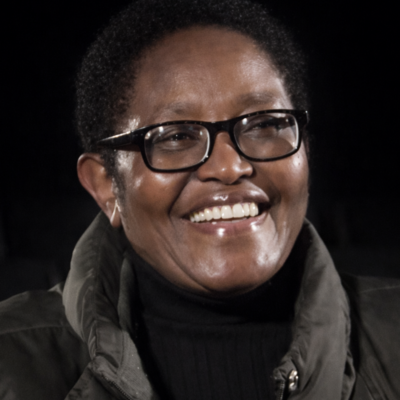
fatima-dk

FATIMA “FATTS” DIKE

Master Storyteller | Playwright | Theatre Director | Personal Development Coach | Cultural

Empowering Generations Through the Power of Storytelling

Fatima “Fatts” Dike is one of South Africa’s pioneering playwrights, master storytellers and cultural mentors. With a career spanning nearly five decades, she has dedicated her life to using theatre, storytelling and creative expression as instruments of social transformation, cultural preservation and personal empowerment.

Recognised as the first black South African woman to have a play published, with The Sacrifice of Kreli in 1976, Fatima broke barriers in an era when the voices of black women were largely excluded from mainstream theatre.

Today, she remains an influential figure in South African performing arts, inspiring emerging artists to discover their identities, embrace their cultural heritage and develop the confidence to tell their own stories.

Her approach combines African oral traditions, indigenous knowledge systems, personal development and contemporary theatre practices, creating opportunities for artists to grow both creatively and personally.

A Pioneer of South African Theatre

Fatima began her professional writing career in the 1970s, establishing herself as a powerful voice in South African theatre during the apartheid era.

Over the decades, she has written more than 20 original plays exploring themes of identity, social justice, human dignity, cultural heritage and transformation.

Her celebrated works include The Sacrifice of Kreli (1976), The First South African (1977), The Crafty Tortoise (1978), Women’s Voices (1997), The Middle Passage (2003) and The Return (2008).

Her work has reached international audiences, and she has collaborated with leading theatre practitioners, including John Kani.

In recognition of her extraordinary contribution to theatre and storytelling, Fatima has received three lifetime achievement awards:

  • Fleur du Cap Lifetime Achievement Award (2020)
  • Naledi Theatre Award (2014)
  • Black Theatre Lifetime Achievement Award – North Carolina, USA (2009)

These honours reflect her enduring influence on South African theatre and her commitment to creating opportunities for underrepresented voices.

Master Educator, Mentor and Personal Development Coach

Beyond her achievements as a playwright and director, Fatima has devoted much of her career to nurturing emerging artists, particularly young people and women from disadvantaged communities.

Through her workshops and mentorship programmes, she helps participants discover their personal strengths, overcome self-doubt and transform lived experiences into meaningful creative expression.

Her teaching combines storytelling, emotional intelligence, self-awareness, confidence-building and practical performance skills.

Her educational and international experience includes:

  • John Carroll University, USA (2011): Lecturer in the English Department, teaching Protest Theatre in South Africa.
  • Open University, United Kingdom (1996): Writer-in-residence, developing creative writing and theatre workshops.
  • New Africa Theatre Association (1997–2002): Scriptwriting lecturer and mentor to emerging playwrights.
  • Vusa’bantu Performing Arts Project (2001–2004): Founder and Artistic Director of a community-based theatre development initiative.

She has also participated in cultural exchange programmes involving France, Norway and the United States, helping connect South African storytelling traditions with international creative communities.

Her Role in the African Indigenous Renaissance (AIR) Project

As a Master Storytelling Facilitator and Personal Development Mentor, Fatima plays an important role in the AIR Project’s mission to empower young artists through cultural education, creative skills development and personal transformation.

Working with Western Cape Arts Festivals since 2023, she has contributed to programmes supporting emerging artists in developing their artistic identities, confidence and professional abilities.

Within the AIR Project, her mentorship focuses on:

  • African storytelling and oral traditions: Introducing participants to the importance of storytelling in preserving indigenous knowledge, history and cultural identity.
  • Personal development: Helping emerging artists develop self-awareness, resilience, confidence and a stronger sense of purpose.
  • Creative expression: Teaching participants to transform personal experiences and community histories into compelling narratives.
  • Performance and stage presence: Developing communication, presentation and storytelling skills for public performance.
  • Cultural identity: Encouraging young people to reconnect with their heritage and recognise the value of their lived experiences.
  • Leadership and empowerment: Equipping participants with interpersonal skills and confidence that support their artistic careers and personal development.

Her workshops create a supportive environment in which participants are encouraged to reflect on their experiences, embrace their individuality and recognise storytelling as both an artistic discipline and a means of personal empowerment.

Preserving Heritage Through Storytelling

Storytelling has always been central to African cultural identity, serving as a means of passing knowledge, values, history and wisdom from one generation to the next.

Through her work with AIR, Fatima helps participants understand that their personal stories, family histories and community experiences form part of a much larger cultural inheritance.

Her mentorship encourages young artists to see themselves not simply as performers, but as custodians of living cultural heritage, capable of preserving and communicating traditions through theatre, oral storytelling and contemporary creative expression.

This approach complements the AIR Project’s broader objectives of cultural preservation, skills development and creative entrepreneurship.

By strengthening participants’ confidence and storytelling abilities, she helps them develop skills that can support opportunities in theatre, education, community arts, cultural tourism and heritage-based creative industries.

A Living Legacy of Courage, Creativity and Empowerment

Fatima Dike’s contribution to South African culture extends far beyond the plays she has written and directed.

Her life’s work demonstrates how storytelling can challenge injustice, preserve identity, inspire personal growth and give a voice to those who have historically been unheard.

Her philosophy is captured in the words:

“Every story we tell is a mirror that helps us remember who we are.”

Through her continued mentorship, she inspires emerging artists to honour their cultural roots while developing the courage and creative skills to shape their futures.

Fatima “Fatts” Dike is more than a pioneering playwright. She is a cultural storyteller, mentor and empowering force whose legacy lives on through the generations of artists she continues to inspire.

Mentor
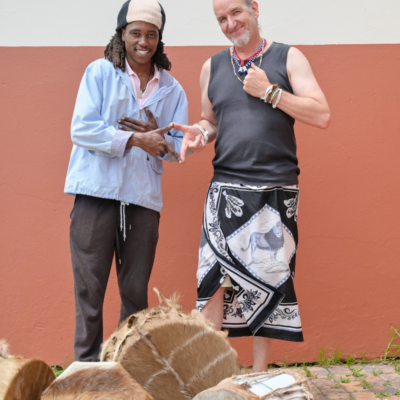
Goffrey

GEOFFREY TRACEY

African Music Specialist | Multi-Instrumentalist | Music Educator | Cultural Heritage Facilitator

Bridging Generations Through African Music and Cultural Heritage

Geoffrey Tracey is an accomplished South African multi-instrumentalist, music educator and cultural facilitator whose life has been deeply influenced by the extraordinary musical heritage of the Tracey family.

As the grandson of renowned ethnomusicologist Hugh Tracey and son of distinguished African music scholar Andrew Tracey, Geoffrey grew up surrounded by the sounds, rhythms and traditions of African music.

His musical journey embraces both African and Western traditions, combining indigenous instruments, percussion, marimba, mbira, classical music and contemporary musical styles.

Through decades of performance, education and intercultural exchange, Geoffrey has developed a distinctive approach to music that celebrates cultural diversity while encouraging a deeper understanding of Africa’s rich musical heritage.

His work reflects a lifelong commitment to preserving traditional musical knowledge and passing it on to future generations.

A Musical Heritage Rooted in African Traditions

Geoffrey’s connection to African music began during his childhood on his grandfather Hugh Tracey’s farm, Saronde, near Krugersdorp.

Growing up in an environment where traditional African music was studied, recorded and performed, he developed an early appreciation for the musical traditions of communities across southern Africa.

His father, Andrew Tracey, was actively involved in researching and recording traditional African music, and Geoffrey was exposed from an early age to the rhythms, instruments and musical practices that would shape his future.

He learned to clap the distinctive African triple beat and began playing the mbira huru while still young.

Alongside his African musical education, Geoffrey developed a strong foundation in Western classical music, participating in choirs, orchestras and school musical ensembles.

This unique upbringing provided him with an understanding of different musical traditions and their ability to connect people across cultural boundaries.

An Accomplished Multi-Instrumentalist and Performer

Geoffrey holds a Bachelor of Music Honours degree from the University of KwaZulu-Natal, specialising in voice through the Italian Bel Canto method and percussion, including marimba and drum kit.

He also achieved Grade 8 in violin, demonstrating the breadth of his musical training.

Throughout his career, he has performed across a diverse range of musical genres, including:

  • Traditional African music and percussion
  • Marimba and mbira
  • Jazz and reggae
  • Steelband music
  • Folk rock and experimental music
  • African spiritual groove music

His versatility as a musician enables him to draw connections between different musical traditions, creating opportunities for collaboration, improvisation and creative exploration.

In addition to performance, Geoffrey has contributed musical compositions and arrangements to marimba teaching publications by Colleen Hart, supporting music education and the development of practical learning resources.

International Educator and Cultural Facilitator

Geoffrey has extensive experience as a music educator, workshop facilitator and mentor, sharing his knowledge with learners and musicians in South Africa and internationally.

His teaching experience includes:

  • Rhodes University, South Africa: Teaching drum kit and African music ensembles.
  • Wynberg Junior Girls’ and Boys’ Schools, Cape Town: Providing music education to young learners.
  • London, United Kingdom: Facilitating marimba workshops.
  • University of California, Los Angeles (UCLA), USA: Teaching music and sharing African musical traditions.
  • University of Technology, Brisbane, Australia: Providing music education in an international academic environment.

His teaching philosophy emphasises practical participation, active listening, rhythmic understanding and the importance of learning music within its cultural context.

Rather than approaching music purely as a technical discipline, Geoffrey encourages participants to appreciate its historical, social and cultural significance.

He has also contributed to academic discussions on music and identity, presenting a paper titled “White Identity and African Drumming” at an ethnomusicology conference at the University of Zululand.

Cultural Understanding and Spiritual Traditions

An important dimension of Geoffrey’s work is his commitment to intercultural understanding and respect for different cultural and spiritual traditions.

Since 2005, he has undertaken training as a sangoma within traditional healing practices in KwaZulu-Natal, developing a deeper personal connection with indigenous spiritual knowledge systems.

His experience has strengthened his appreciation of the relationship between music, ritual, identity, community and spiritual expression.

As an intercultural facilitator, Geoffrey seeks to create environments where people from different backgrounds can share knowledge, develop mutual respect and celebrate the diversity of their cultural traditions.

His work encourages dialogue and understanding, recognising music as a powerful means of connecting communities and preserving cultural identity.

His Contribution to the African Indigenous Renaissance (AIR) Project

As a Music Educator and Cultural Heritage Facilitator, Geoffrey brings valuable musical knowledge, practical teaching experience and an understanding of African indigenous traditions to the AIR Project.

His expertise supports the programme’s mission of reconnecting emerging artists with African musical heritage while developing practical skills that can contribute to their personal and professional growth.

His areas of contribution include:

  • African indigenous music education: Introducing participants to traditional African musical forms, rhythms and instruments.
  • Marimba, mbira and percussion: Developing practical instrumental skills and an understanding of African rhythmic structures.
  • Musical performance and ensemble development: Encouraging collaboration, listening skills, improvisation and group performance.
  • Cultural heritage preservation: Helping participants appreciate the historical and cultural importance of traditional African music.
  • Creative development: Supporting confidence, musical expression and the ability to explore different musical traditions.
  • Intercultural understanding: Encouraging respect for diverse communities, traditions and forms of cultural expression.

Through this approach, Geoffrey helps emerging artists recognise that traditional African music is not simply a historical practice, but a living and evolving cultural resource.

His contribution complements the AIR Project’s wider objectives of indigenous knowledge preservation, skills development and creative empowerment.

Preserving Indigenous Knowledge for Future Generations

For Geoffrey, preserving African musical traditions involves more than documenting instruments, rhythms and performances.

It requires the active transmission of knowledge through teaching, participation, mentorship and cultural exchange.

His experience across academic institutions, community settings and international workshops has reinforced his belief that traditional music must remain accessible and meaningful to future generations.

By encouraging young people to learn, practise and share indigenous musical traditions, he contributes to keeping these important forms of cultural expression alive.

This philosophy aligns closely with the African Indigenous Renaissance Project’s commitment to empowering young creatives to become practitioners and custodians of Africa’s living heritage.

A Legacy of Musical Knowledge and Cultural Connection

Geoffrey Tracey’s contribution to music education is shaped by a remarkable family heritage, extensive international experience and a personal commitment to cultural understanding.

His work demonstrates how African musical traditions can transcend geographical, cultural and generational boundaries while retaining their historical significance.

Through education, performance and mentorship, he continues to share the knowledge and musical traditions that have influenced his life.

His vision is to ensure that this knowledge remains accessible, relevant and capable of enriching the lives of future generations.

Geoffrey Tracey is more than a multi-instrumentalist and educator. He is a bridge between musical traditions and generations, helping preserve Africa’s cultural heritage while inspiring young artists to discover its continuing relevance in the modern world.

Hello